
Our thesis
Why capillary blood
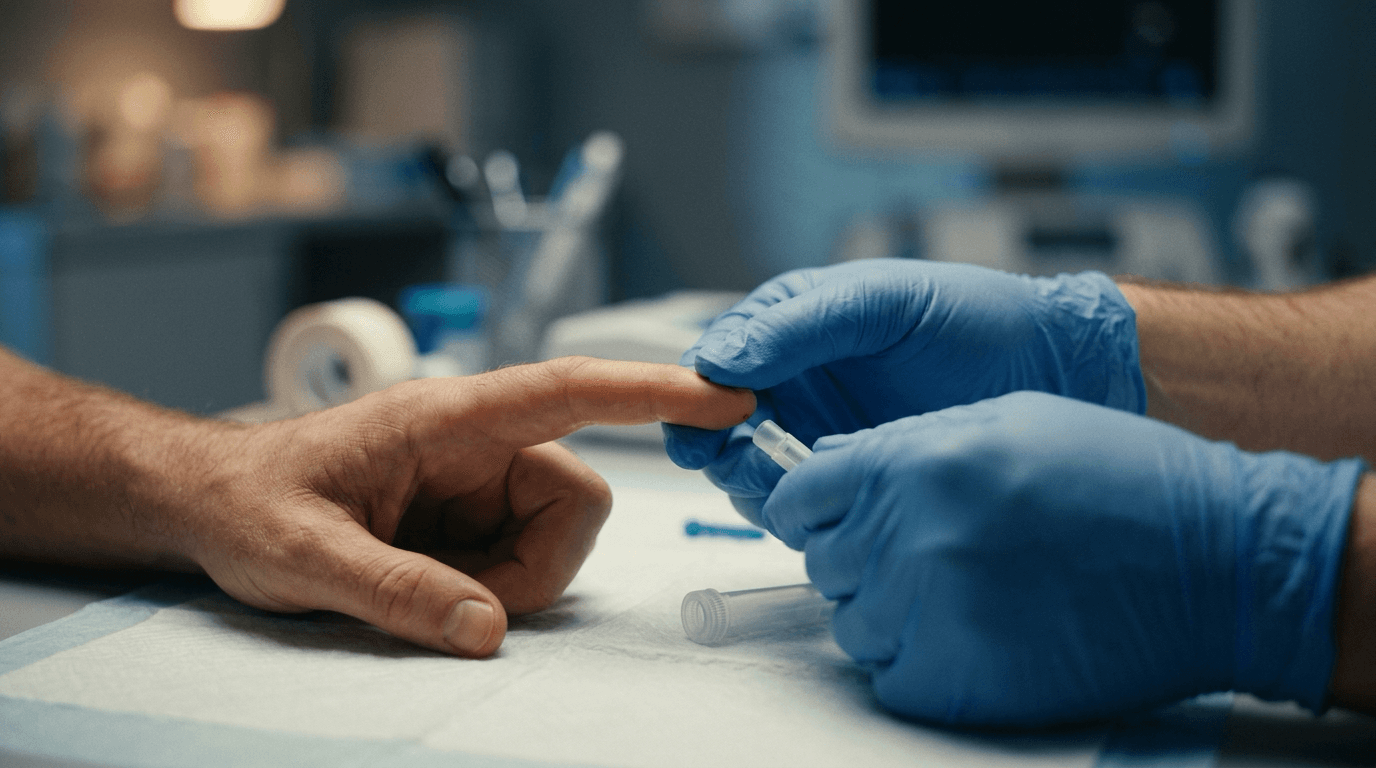
Most blood testing still begins with venous collection — a model optimized for centralized laboratory workflows. As diagnostics move closer to patients, sample collection needs to evolve with them. We believe the future starts with a controlled microliter sample from the fingertip. Here is why.
The waste in how we test today
Traditional venous blood draw carries costs that have nothing to do with the test itself.
Built for the central lab
The venous draw assumes a trained phlebotomist and a clinic visit — putting a person, a place and an appointment between someone and a simple test.
More blood than the test needs
A standard venous tube is filled far beyond what most assays actually consume. Much of what is drawn is never used.
Logistics and delay
Samples must be transported and processed on a schedule the central lab sets — adding handling, cost and time.
People left out
For the elderly, children, those far from a clinic or the needle-averse, the draw itself is the barrier to getting tested at all.
Every extra millilitre has a cost
Blood taken for a test is routinely far more than the test needs — and much of each tube is discarded. For patients who are tested again and again, that adds up to real harm.
Over-collected, then discarded
Tubes are filled well beyond what the assay uses — studies find roughly 19% more blood drawn than the laboratory needs, much of it never used.
Repeated draws cause anaemia
Hospital-acquired anaemia affects an estimated 40–74% of inpatients, and repeated diagnostic blood collection is an important contributor. In intensive care, around 29 mL is drawn per day — and every 50 mL raises the risk of moderate-to-severe anaemia by roughly 18%.
The most vulnerable pay most
Critically ill adults — and especially premature newborns, whose total blood volume is tiny — can be pushed toward transfusion by the very tests meant to help them.
Our goal is to serve these patients — to take only the microliter volume a test actually needs, and to bring that test to the point of care. It is what a 2026 CCLM review calls Sample Volume Management: less blood taken, better preanalytical quality, and testing where people already are — the foundation of decentralized healthcare.
Selected reading
- Šimundić et al., Sample volume management: the clinical laboratory's role in minimizing diagnostic blood loss, CCLM (2026)
- Phlebotomy & iatrogenic anemia in critically ill adults, Crit. Care Med. (2022)
- Phlebotomy overdraw in the neonatal ICU, J. Pediatr. (2000)
- AABB — Blood Belongs in the Patient (Patient Blood Management)
Not one drop — a controlled volume
A single drop can be sufficient for some tests, but relying on individual drops can introduce substantial preanalytical variability — successive drops from the same fingertip can vary several-fold. For many applications, what matters is not simply obtaining a drop, but collecting a defined and reproducible volume — from tens to hundreds of microliters depending on the assay and workflow. Get the volume and consistency right, and capillary blood can support far more testing than a single drop allows.
Consistency is the whole game
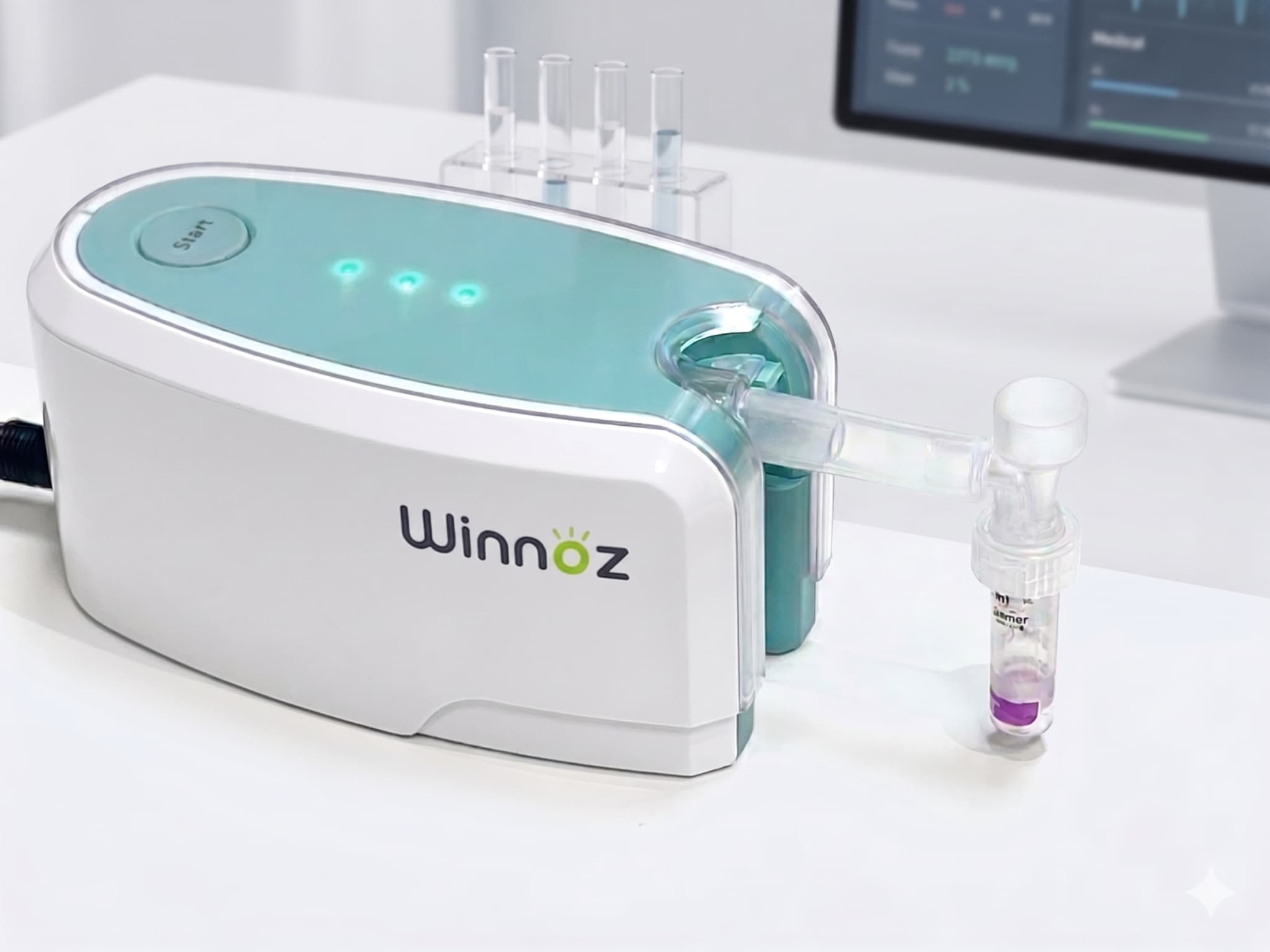
For capillary sampling to become a reliable alternative in appropriate applications, collection needs to be consistent — regardless of where it happens or who performs it. That is an engineering problem, not a marketing one. It is the problem Haiim is built to solve: a vacuum-assisted mechanism that standardises each collection into formats the laboratory already trusts.
From a snapshot to a trend
A single blood test is only a snapshot. Key biomarkers shift with lifestyle, medication and health status — so one reading can miss what matters. When diagnostics move closer to patients, sample collection has to move with them: standardised capillary microsampling makes frequent, low-burden testing practical — measurement that keeps up with the person.
Where we are headed
We believe a large share of routine blood testing can move from the vein to the fingertip — removing the waste built into today's system, easing the burden on patients who are drawn again and again, and bringing testing within reach of far more people. We are building toward that future one validated step at a time.
Build the future of blood collection with us
Whether you run a laboratory, a diagnostics business or a network with reach, let's talk about bringing capillary collection into your workflow.